How to Choose an Anti-Counterfeit Platform

Smart Epsilon
August 10, 2026
August 10, 2026
Every manufacturer spends a heavy amount in building a trusted brand.
Teams spend years developing products and maintaining quality standards. They also invest significant effort in compliance and customer relationships. Even with these efforts, counterfeit products still make their way into the market.
The scale of the problem is hard to avoid. According to the ASPA-CRISIL report, counterfeiting costs the Indian economy approximately ₹1 trillion every year.
Consumer surveys show that counterfeit products are found in many industries. These include pharmaceuticals, agrochemicals and automotive parts. FMCG products, cosmetics and apparel are also affected.
For manufacturers, the impact goes beyond lost sales. A counterfeit product carrying your brand name can damage consumer confidence. It can affect the reputation your business has built over time. It may also create trust issues that are difficult to rebuild.
As counterfeit products are increasing, many businesses are looking for ways to protect their brands. But choosing the right anti-counterfeit platform is not always easy.
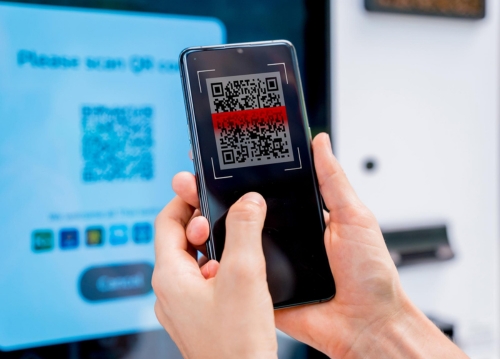
A common misconception is that adding a QR code automatically creates product security. But in reality, not all QR codes serve the same purpose.
Many businesses still use standard QR codes. Those codes simply redirect consumers to a website or product page. While these codes may offer convenience, they do not necessarily provide meaningful protection against counterfeiters.
A counterfeiter can purchase a genuine product, copy the QR code, reproduce it on fake packaging and distribute counterfeit products using the same code. To the consumer, the fake product may appear genuine because the QR code continues to function normally.
This is why businesses must evaluate anti-counterfeit software. That should be based on their ability to support product authentication rather than simply their ability to generate QR codes.
The best anti-counterfeit solution should help manufacturers address that, ‘can consumers reliably verify that the product they are holding is genuine?’
The answer should be immediate, simple and trustworthy.
A strong authentication platform should help brands:
The objective is not merely to place a code on packaging. The objective is to help consumers distinguish genuine products from counterfeit ones.
Consider the following questions when evaluating different anti-counterfeit solutions.
The most advanced technology in the world provides little value if consumers do not use it. Verification should be simple and intuitive. Consumers should not have to navigate complicated processes or learn new technical systems. The easier the experience, the more likely people are to verify products before purchase or consumption.
Many solutions offer brand protection platform features with tracking, reporting capabilities or inventory-related functions. While those capabilities may serve other business needs, an anti-counterfeit platform should primarily focus on helping users verify authenticity. The platform should be able to provide a clear and reliable authentication outcome rather than creating uncertainty for the consumer.
Counterfeit operations rarely remain confined to a single location. An effective authentication platform should help brands identify unusual verification patterns that may indicate potential misuse or duplication or counterfeit activity. This information can become valuable when investigating counterfeit incidents and protecting affected markets.
Many businesses begin with a limited deployment and later expand across multiple product categories. The chosen platform should be capable of supporting future growth. That also without requiring a complete redesign of packaging or authentication processes. Scalability becomes especially important for organizations managing large product portfolios across multiple regions.
A solution should work within existing business operations. If implementation requires excessive disruption, extensive infrastructure changes or major packaging redesigns, adoption often becomes difficult. Businesses should look for solutions that can be deployed efficiently while maintaining operational continuity.
Technology alone cannot solve the problem. Counterfeit prevention requires an understanding of how counterfeiters operate and how products move through markets. It even understands how consumers interact with products at the point of purchase. A vendor should be able to discuss real-world counterfeit challenges and demonstrate how their solution helps address them.
Selecting an anti-counterfeit platform based solely on upfront cost can become an expensive mistake. A low-cost solution that fails to prevent duplication may create a false sense of security while counterfeit products continue to circulate in the market.
The consequences can include:
In many cases, the financial impact of counterfeit activity far exceeds the initial investment required for effective protection.
The ultimate purpose of an anti-counterfeit platform is not technology for its own sake. It is trust.
Consumers want to know that the products they are buying are proper or not.
The same way businesses want to protect their brands.
Along with that, distributors and retailers want assurance that the products they handle are authentic.
So… when product authentication becomes simple, reliable and accessible, everyone in the ecosystem benefits.
We understand how difficult it is to protect a brand. That also in an increasingly complex marketplace. Counterfeiters continuously adapt their methods. It is by making it essential for businesses to adopt solutions that focus on authentication and consumer trust.
Here at Smart Epsilon, we believe consumers should have a simple way to verify products before purchase. Through KaVACH, we help manufacturers strengthen product authentication. Along with that we support consumer verification. We even help in reducing the risks associated with counterfeit products because protecting a brand starts with helping people know that what they are buying is genuine.
Product authentication should not be complicated. It should be simple, accessible and available to every consumer. Let’s build a more verifiable marketplace together.